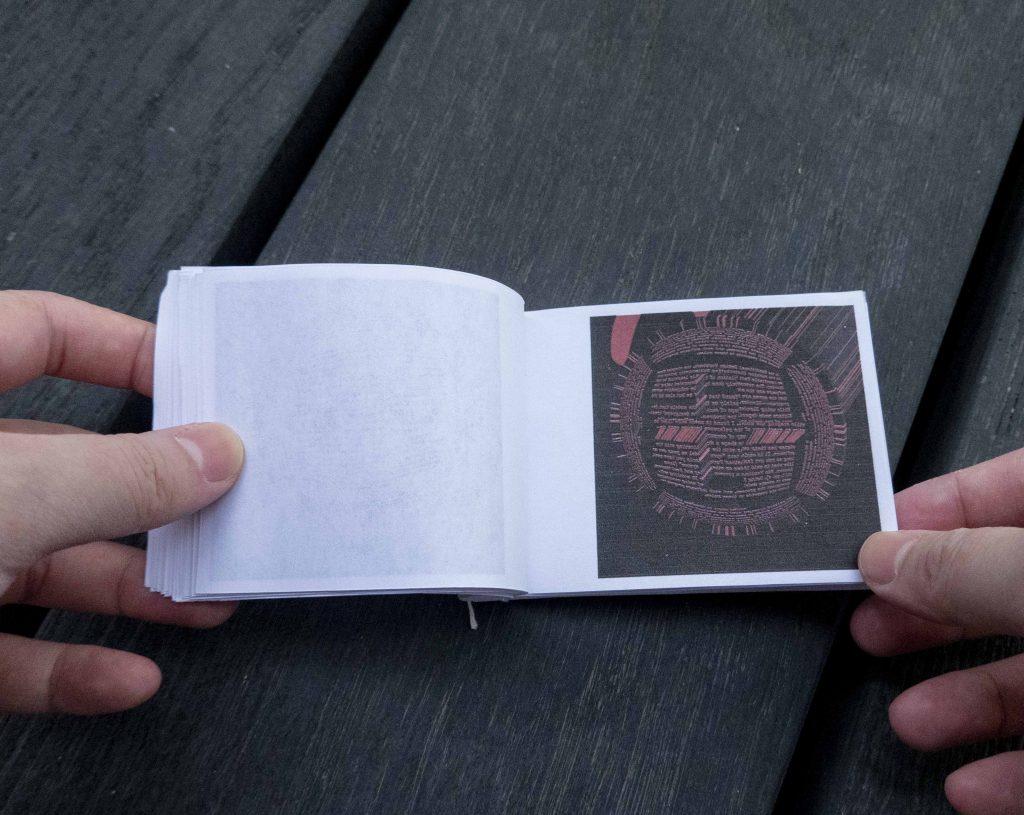
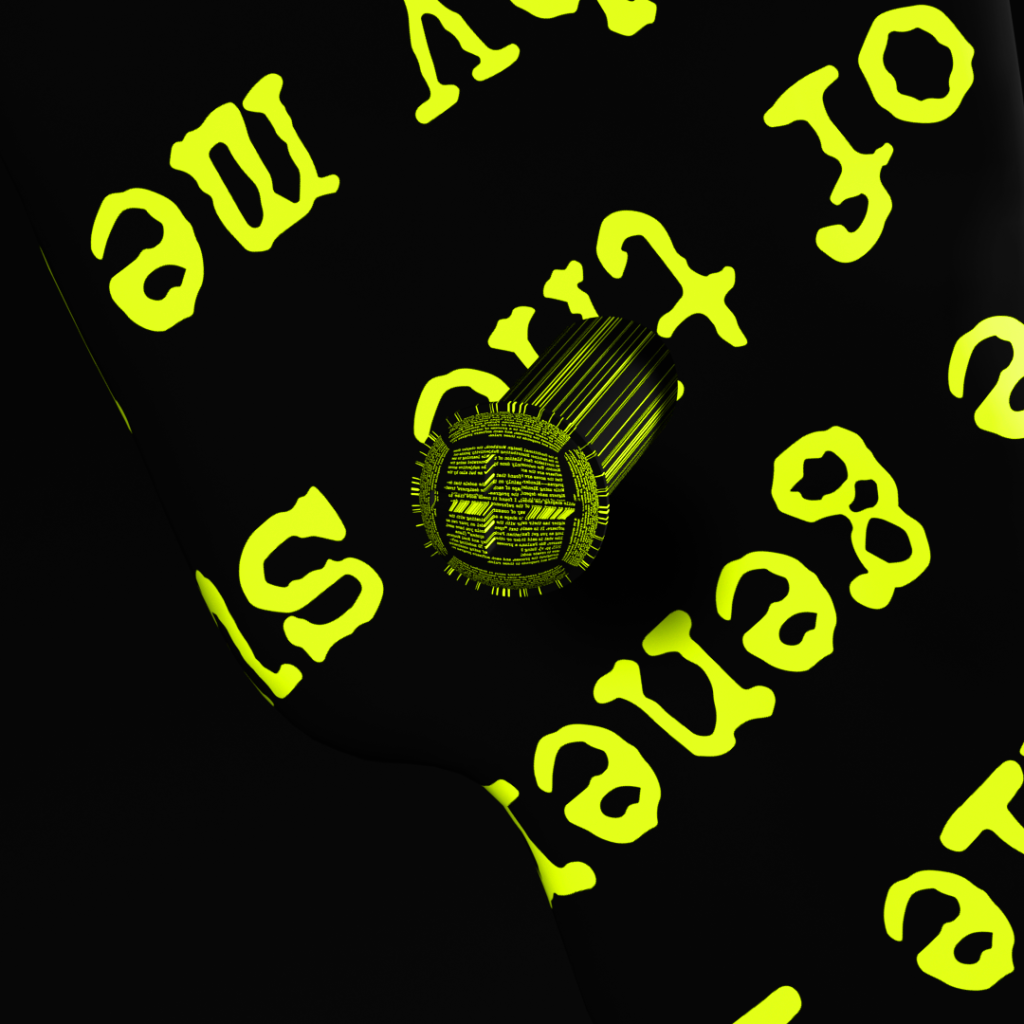
In the Methods of Iterating, I used Blender to deliver messages using texts that were applied to 3D forms. The text forms become distorted when applied to the surface of 3D models. From my point of view, I think each model personalizes the texts in different ways. Each sentence turns into fragments, and each word’s order turns into puzzles. The fragments and puzzles left the model and its viewer the freedom to rearrange and translate.
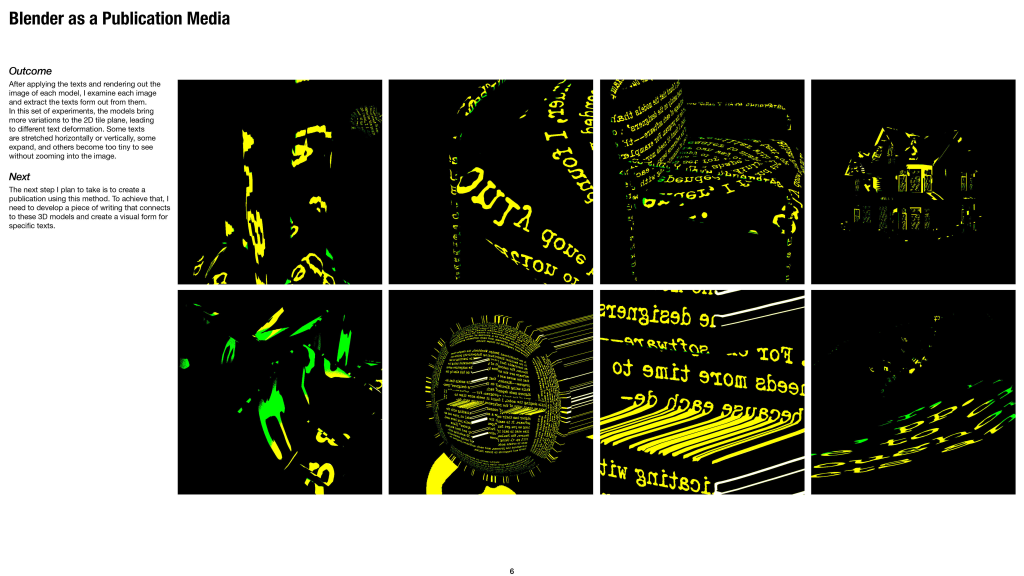
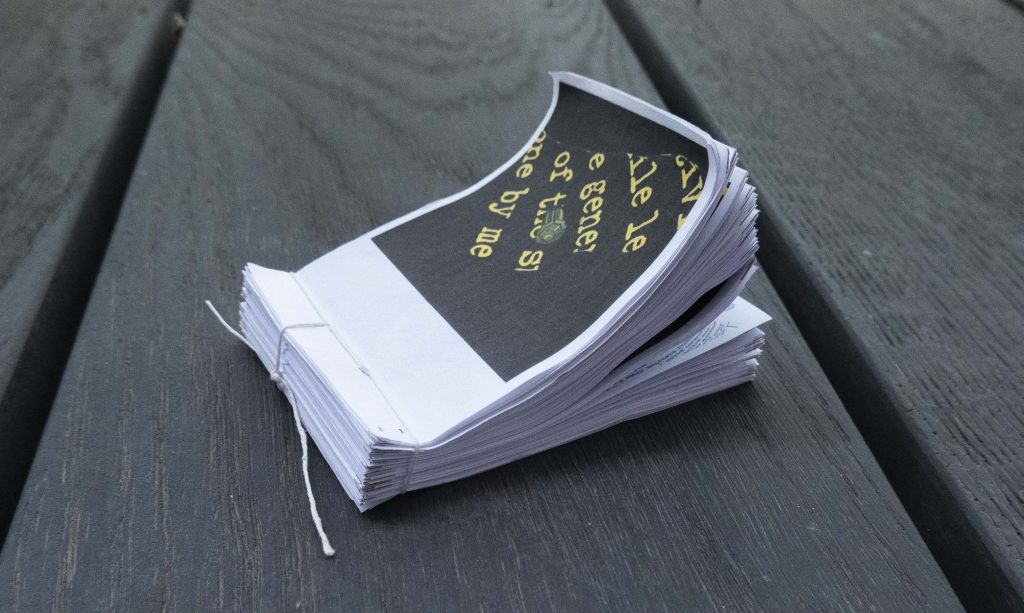
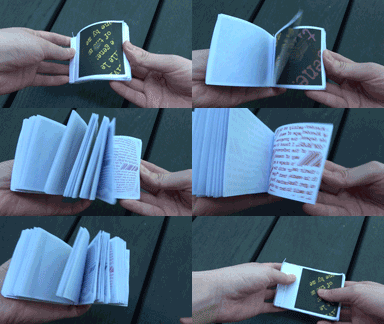
The 100-page publication I made is based on one image in Methods of Iterating. During the process of applying texts to the 3D models, I found one thing that interest me. The texts are applied to the models as a 2D map. The texts are shaped in various ways in responding to the surfaces of each model. I notice that at some parts of the model, the texts shrink and are shown as a colour block on the model. Then, when I zoomed several times into the model, the text was revealed to me. I was surprised by this moment that there was a city that was camouflaged by my eyes and the perspective provided by Blender. Therefore, I used this specific model to make a flip book that shows the motion of zoom into a model.